
Hunt Parole and Probation Differences
Parole is conditional release from a Texas prison sentence. The Texas Board of Pardons and Paroles, or BPP, decides whether a person receives parole or mandatory supervision. The TDCJ Parole Division then investigates a release plan and supervises the person after release. Probation, called community supervision in Texas law, is imposed by a court and is administered locally. It can be ordered instead of confinement or after part of a sentence, depending on the judgment.
The distinction matters because the two systems keep different records. A TDCJ offender detail may show parole review information, a projected date, or a release status. A Hunt court judgment identifies probation and its terms. The Hunt County Community Supervision and Corrections Department, or HCCSCD, does not offer a public name search. Its client tools are for enabled clients to check their own appointments and fee balances.
Verify Hunt County Parole Status
Start with the TDCJ Offender Search when the person entered state prison. Search by TDCJ or SID number when known because a number reduces the risk of choosing a similar name. Otherwise use the exact name and compare the date of birth, offense, county of conviction, and other identifiers. Open the offender detail and preserve the labels exactly. Projected Release Date, Scheduled Release, Parole Review Information, and current location do not mean the same thing.
- Gather the legal name, aliases, birth date, TDCJ or SID number, and Hunt County case number.
- Open the official TDCJ result and compare several identifiers before relying on it.
- Read Parole Review Information and the current location or status together.
- Translate any vote code through the official BPP vote-options page.
- Confirm actual release through TDCJ Classification and Records when the result is unclear.
A vote can be favorable while the person remains confined. Release may still depend on date calculation, a required program, an approved residence, a detainer, or final processing. For a broader release-record workflow, use the Hunt County released-inmate search. The projected release date page explains why future dates move.
Hunt County Parole Review Process
Texas parole review is usually an administrative, file-based process rather than a courtroom hearing. Parole Division generally identifies a case about six months before initial eligibility and four months before a later review. An Institutional Parole Officer develops a case summary. A three-member voting panel considers the file in sequence, and two votes determine the panel decision. Interviews are discretionary.
No stable public calendar of each prisoner's review appointment was verified. Public notices for Board open meetings are not individual-inmate hearing schedules. The sound route is the TDCJ offender detail's Parole Review Information, followed by the BPP review and vote-code resources. Published process windows are not personal hearing dates or release countdowns.
| Vote code | General meaning |
|---|---|
| FI-1 | Favorable release when eligible, subject to final processing. |
| FI-2 | Favorable pathway tied to a stated future date. |
| FI program variants | Release is conditioned on transfer, a program, and timing rules. |
| RMS | Approved release to mandatory supervision. |
| NR | Denied, with another review month or year. |
| SA or DMS | Serve-balance or mandatory-supervision denial outcome. |
Hunt Supervision Office Split
Hunt County has a clear two-office division. The HCCSCD at 4515 Stonewall Street in Greenville handles court-ordered probation and pretrial supervision for the 196th and 354th District Courts and County Courts at Law 1 and 2. Its phone number is 903-455-9563. A released person should follow the exact reporting terms in the signed order rather than infer duties from a jail status.
The Greenville District Parole Office, Region I, is at 6130 Highway 66, Greenville, Texas 75402, and can be reached at 903-455-6757. It serves Fannin, Hunt, and Rains counties for parole and mandatory-supervision navigation. That office is not where a member of the public searches for a stranger. Official TDCJ status and the person's own reporting documents remain the right starting points.
Use HCCSCD for a Hunt court's probation or pretrial order. Use TDCJ Parole Division for parole or mandatory supervision after state-prison custody.
Hunt County Probation Confirmation
A court record is the strongest public confirmation of probation. Hunt felony and district-court files route through the District Clerk. Misdemeanor matters route through the County Clerk and County Courts at Law. Search for the case, then request the judgment, sentence, probation order, revocation order, or discharge document that answers the question. Judicial records follow court-access rules, not the ordinary Texas Public Information Act route used for executive-agency records.
Probation does not prove a prior prison release. A person may have received community supervision without entering TDCJ. Pretrial supervision is different again: it governs conduct while a charge remains pending and is not a sentence. If an online docket and a signed order seem to conflict, rely on the filed order and ask the clerk for clarification.
Hunt Parole Warrant Limits
No public Hunt County sheriff or TDCJ parole-absconder list was verified. TDCJ's warrants function uses law-enforcement databases, so absence from a public webpage cannot clear a warrant. An absconder is a supervised person alleged to have stopped reporting or otherwise left supervision without authorization. That label should come only from the responsible agency or court record.
Greenville Municipal Court publishes a dated active-warrant list, but it covers municipal Class C matters. The city also warns that recent payments may not yet appear. This narrow list cannot verify a county felony warrant, a probation revocation warrant, or a TDCJ parole warrant. Urgent status questions belong with counsel or the responsible court or agency.
Property and ID After Release
The Hunt County Sheriff states that property or evidence pickup requires an appointment at 903-453-6849. That rule concerns property held through the Sheriff's evidence function. It is not a published Detention Center procedure for returning an inmate's personal belongings at discharge. Those processes must remain separate, and the jail should be contacted directly about belongings from a specific custody episode.
TDCJ's Reentry Program describes pre-release work on replacement identity documents for eligible state prisoners, including a Social Security card, birth certificate, and state identification. It does not apply to every person released from the Hunt County Detention Center. A person leaving state custody should use their own reentry plan and parole instructions; a county-jail release should confirm local procedures rather than assume TDCJ services apply.
Confirm Hunt County Release
Supervision records answer what follows custody, not always when the jail door opened. Hunt's historical jail archive can show a Released Date for a county booking. A signed judgment or release order supplies legal context. TDCJ records address state custody, while BPP records explain the parole decision. Read these records together.
The official local supervision page shows the Greenville office serving Hunt County.
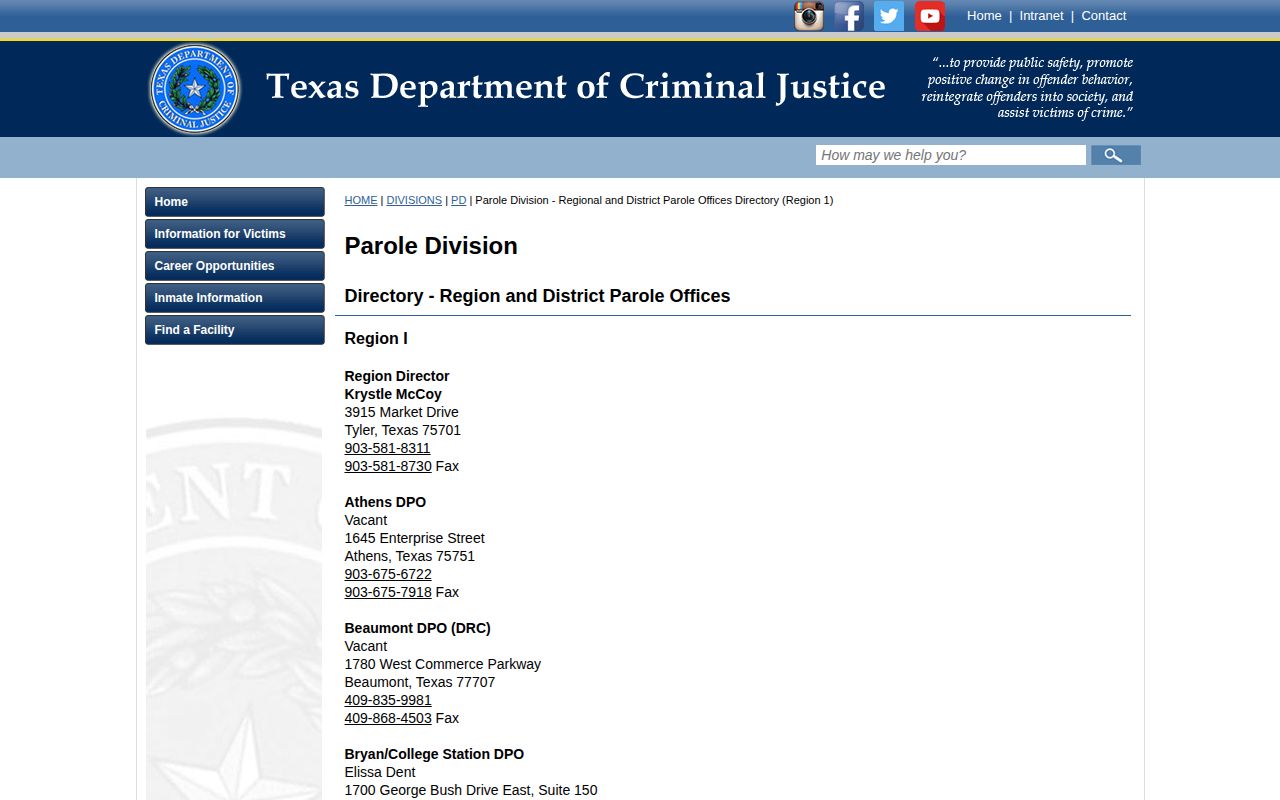
The screenshot identifies the local office, but it does not disclose anyone's personal supervision status. For TDCJ calculation or actual-release questions, Classification and Records is the focused office at 936-437-6231. Verify rather than infer from a favorable vote, scheduled date, or office assignment.
Hunt Supervision Alert Scope
Release notifications provide another check, but their scope follows the custodian. Texas IVSS-Counties covers available county jail and court events. Separate TDCJ IVSS covers prison custody, parole, and mandatory supervision. A county transfer notice should lead to a TDCJ search; it should not be described as release to the community. Account alerts can lag or fail, so silence has no evidentiary value. Compare each notice with the jail, court, or TDCJ record that created the event.
Public Record Search
Sponsored Results